

 Deutsch
 Français
venom news
What Is Androctonus Amoreuxi Scorpion Venom?
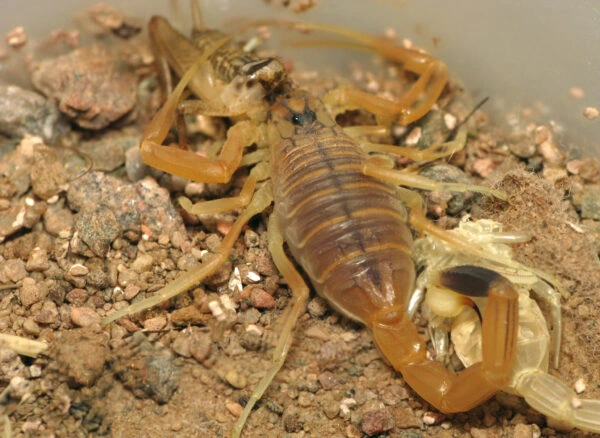
What Is Androctonus Amoreuxi Scorpion Venom? , Why Researchers Buy It, and Where to Order in Europe
What Is Androctonus Amoreuxi Scorpion Venom? There are venoms, and then there is Androctonus amorexius venom. One of the most biochemically rich secretions in the scorpion world, this Egyptian fat-tailed scorpion’s venom has quietly become a priority extract for biomedical laboratories across Europe, the UK, and beyond. Whether you are a pharmacologist, a cancer researcher, or a peptide chemist, understanding what this venom does at the molecular level is essential before you buy venoms online.
Order Androctonus Amoreuxi Scorpion Venom Online (Research Grade)
Androctonus amoreuxi scorpion venom is a research-grade biological extract sourced from the Egyptian fat-tailed scorpion. At PureVenoms, we supply lyophilised, high-purity venom verified for biochemical and pharmacological applications. Scientific studies confirm it contains 100 to 700 distinct bioactive components, with peptides as the dominant fraction. Our product is suited for anticancer studies, peptide isolation, and ion-channel research. Discreet, compliant shipping across Europe and beyond. Buy Androctonus amoreuxi scorpion venom directly from our verified venom shop.
What Is Androctonus Amoreuxi Scorpion Venom?
Androctonus amoreuxi scorpion venom is a complex biological secretion produced by the Egyptian fat-tailed scorpion (Androctonus amoreuxi), a member of the family Buthidae native to North Africa and the Middle East. The venom is a highly complex mixture of approximately 100 to 700 different components, wherein peptides are the major constituents, carrying diverse biological and pharmacological properties.
The scorpion’s stinger, known as the telson, houses a pair of venom glands. The stinger is sickle-shaped, and venom is ejected through a pair of venom pores on its subterminal portion, with both venom ducts separated by connective tissue. This anatomical precision means the secretion is highly concentrated, making it extremely valuable for research.
Why Is Androctonus amoreuxi Venom So Valuable for Biomedical Research?
The short answer: peptide diversity. Scorpion venoms are known to contain highly bioactive peptides, several of which have demonstrated strong antiviral activity against a range of viruses. A. amoreuxi venom, in particular, has attracted scientific attention across multiple therapeutic areas.
Three Core Research Properties
1. Anticancer Activity
A. amoreuxi venom showed significant anticancer efficacy in vitro against the human breast cancer MCF-7 cell line and in vivo against Ehrlich ascites carcinoma cells in mouse models. Treatment at a dose of 0.22 mg/kg every other day produced measurable results.
Venom treatment induced significant reductions in tumour volume, viable EAC cell count, Ki67 expression, and VEGF levels, alongside increases in mean survival time and caspase-3 expression.
More recently, research on prostate cancer confirmed its reach. A. amoreuxi scorpion venom demonstrates significant cytotoxic and antiproliferative effects on prostate cancer cells (PC3), reducing cell viability in a dose-dependent manner and decreasing Bcl-2 gene expression.
2. Anti-Inflammatory, Analgesic, and Antipyretic Effects
The venom of A. amoreuxi produced significant peripheral and central analgesic activity in both mouse and rat models, evaluated at doses of 1/10 and 1/5 of the established LD50. These results were statistically significant (p < 0.05), giving the findings genuine pharmacological weight.
The research team tested anti-inflammatory activity using a carrageenan-induced paw oedema model in mice, while antipyretic activity was assessed using a Brewer’s yeast pyrexia model in rats. Both outcomes were positive, pointing toward natural pain-management scaffold compounds within the venom peptide library.
3. Antiviral Peptides Including Anti-SARS-CoV-2 Activity
Researchers generated the first annotated reference transcriptome for the A. amoreuxi venom gland and identified twelve previously undescribed venom peptides using mass spectrometric and transcriptomic analysis.
A synthetic venom peptide demonstrated anti-SARS-CoV-2 activity at nanomolar concentrations in a cell-based assay, with an IC50 of 200 nM, nearly 600-fold lower than observed in the receptor-binding domain inhibition assay. This positions A. amoreuxi venom peptides as excellent scaffolds for designing novel antiviral compounds.

Key Toxins Inside Androctonus Amoreuxi Venom
Three major alpha-type toxins have been characterised from A. amoreuxi scorpion venom: AamH1, AamH2, and AamH3, each carrying distinct immunological and pharmacological profiles. These sodium-channel-targeting peptides are the primary neurotoxic components and are also the most frequently isolated fractions for pharmaceutical research.
| Toxin | Type | Primary Target | Research Application |
|---|---|---|---|
| AamH1 | Alpha-type neurotoxin | Voltage-gated Na⁺ channels | Neurological research |
| AamH2 | Alpha-type neurotoxin | Voltage-gated Na⁺ channels | Pain signalling studies |
| AamH3 | Alpha-type neurotoxin | Voltage-gated Na⁺ channels | Antivenom development |
| AamAP1 | Cytolytic peptide | Cancer cell membranes | Anticancer peptide research |
| Ceramide-enriched lipids | Bioactive lipid | Cancer/neuroimmune pathways | Lipidomic and oncological studies |
Source: PubMed, ScienceDirect, Tandfonline (2009 to 2025)
What Makes the Lipid Profile of A. Amoreuxi Unique?
Beyond peptides, the venom carries a remarkably diverse non-protein lipid fraction. A 2025 lipidomic study identified 548 distinct lipid species in A. amoreuxi venom using UHPLC-MS/MS analysis. The dominant lipid classes included ceramides, phosphatidylcholines, triglycerides, and sphingomyelins.
KEGG pathway analysis revealed significant enrichment in glycerophospholipid metabolism, choline metabolism in cancer, and neuroimmune signalling pathways, suggesting roles in inflammatory modulation, cell proliferation, and neuropharmacology.
This makes A. amoreuxi venom a uniquely layered research substrate, where the peptide fraction and the lipid fraction both carry independent therapeutic signals.
How Does Androctonus Amoreuxi Venom Differ from Androctonus Crassicauda?
Both belong to the Androctonus genus, but their biochemistry diverges meaningfully. A. crassicauda (the black fat-tailed scorpion) carries a heavier cardiovascular toxin load, while A. Amoreuxi shows stronger cytolytic and antiproliferative peptide activity in published cancer models. For researchers focused on oncology or antiviral drug design, A. amoreuxi is the more targeted starting material.
Researchers focused on cardiovascular pharmacology may instead prefer Androctonus crassicauda scorpion venom, available separately in our online venom shop.
Where to Buy Androctonus Amoreuxi Scorpion Venom in Europe and the UK
We supply Androctonus amoreuxi scorpion venom as a lyophilised (freeze-dried) powder, which maximises stability and shelf life during international shipping. Our supply chain maintains cold-chain integrity from collection through to delivery.
Why researchers across Germany, France, the Netherlands, and the UK choose PureVenoms:
- Lyophilised format for maximum biochemical stability
- Lot-specific purity documentation provided on request
- Compliant with EU research import regulations
- Discreet, fast dispatch within Europe
- Secure ordering via our venom online shop
“Venom research starts with venom quality. Low-grade material produces low-grade data.” At PureVenoms, that is a principle we do not compromise on.
Best Practices: How to Store Androctonus Amoreuxi Scorpion Venom
Lyophilised A. amoreuxi venom should be stored at -20°C in a sealed container, away from moisture. Once reconstituted in the appropriate buffer, use within the session or aliquot immediately. Repeated freeze-thaw cycles degrade peptide integrity and reduce IC50 accuracy in cell-based assays.
Key Takeaways
- Androctonus amoreuxi scorpion venom is one of the most biochemically diverse animal venoms available for research.
- It contains 100 to 700 bioactive components, dominated by neurotoxic and cytolytic peptides.
- Published studies confirm anticancer activity against breast cancer (MCF-7) and prostate cancer (PC3) cell lines.
- Venom peptides show anti-SARS-CoV-2 activity at nanomolar concentrations (IC50: 200 nM).
- The venom’s lipidome contains 548 distinct lipid species with neuroimmune and oncological significance.
- PureVenoms supplies research-grade, lyophilised A. amoreuxi venom with verified purity for EU and UK researchers.
What is Androctonus amoreuxi scorpion venom used for in research?
A. amoreuxi venom is used in anticancer, antiviral, anti-inflammatory, and analgesic research. Its peptides target voltage-gated sodium channels, cancer cell membranes, and viral replication cycles.
How many bioactive compounds are in Androctonus amoreuxi venom?
The venom is a highly complex mixture of approximately 100 to 700 different components, with peptides as the major bioactive constituents.
Is Androctonus amoreuxi venom effective against cancer cells?
Yes. Treatment induced significant reduction in tumour volume, viable cancer cell count, Ki67 and VEGF expression while increasing mean survival time and caspase-3 levels in tested animal models.
What antiviral properties does Androctonus amoreuxi venom have?
A synthetic peptide derived from A. amoreuxi venom inhibited SARS-CoV-2 replication in human lung cells at an IC50 of 200 nM in a cell-based assay.
Where can I buy Androctonus amoreuxi scorpion venom in the UK or Europe?
You can buy Androctonus amoreuxi scorpion venom in lyophilised research-grade form directly from PureVenoms, with EU-compliant delivery across the UK, Germany, France, the Netherlands, and beyond.
What is the LD50 of Androctonus amorexi venom?
The LD50 of A. amoreuxi venom via intramuscular injection in mice was estimated at 0.88 ± 0.06 mg per kg of body weight.
What are the main toxins in Androctonus amorexi scorpion venom?
Three major alpha-type toxins have been characterised: AamH1, AamH2, and AamH3, each with distinct immunological and pharmacological properties targeting voltage-gated sodium channels.
Does Androctonus amoreuxi venom have anti-inflammatory properties?
Yes. The venom demonstrated significant antipyretic and anti-inflammatory activity in carrageenan-induced paw oedema and Brewer’s yeast pyrexia models at sublethal doses.
How is Androctonus amoreuxi scorpion venom different from other scorpion venoms?
Its venom is notable for a ceramide-enriched lipid profile and a broad cytolytic peptide library. A 2025 lipidomic study identified 548 distinct lipid species, linking them to neuroimmune signalling and cancer metabolism pathways.
Can I order Androctonus amoreuxi venom alongside other research venoms?
Yes. Our venom online shop offers a full range, including Buthus occitanus scorpion venom, Death Hunter scorpion venom, and Black Mamba snake venom for combined research projects.
Tags:
- Androctonus amoreuxi venom for sale,
- buy scorpion venom Europe,
- Egyptian scorpion venom research,
- Androctonus amoreuxi anticancer peptides,
- scorpion venom UK supplier,
- lyophilised scorpion venom order,
- Androctonus amoreuxi antiviral study,
- best scorpion venom research grade,
- fat-tailed scorpion venom buy,
- Androctonus amoreuxi venom price
References
- PubMed (2016). In vitro and in vivo antitumour effects of Androctonus amoreuxi venom in an Ehrlich ascites tumour model. https://pubmed.ncbi.nlm.nih.gov/27247867/
- Springer Open (2020). Antinociceptive, anti-inflammatory, and antipyretic effects of Androctonus amoreuxi venom. https://basicandappliedzoology.springeropen.com/articles/10.1186/s41936-020-00191-x
- ScienceDirect (2023). Venom gland transcriptome and anti-SARS-CoV-2 activity of A. amoreuxi peptides. https://www.sciencedirect.com/science/article/pii/S0196978123002048
- PubMed (2009). Full characterisation of three toxins from A. amoreuxi scorpion venom: AamH1, AamH2, and AamH3. https://pubmed.ncbi.nlm.nih.gov/19486908/
- ResearchGate (2017). Anti-proliferative effects of A. amoreuxi venom on prostate cancer PC3 cells. https://www.researchgate.net/publication/315805572
- ScienceDirect (2013). Fine structure of the stinger and venom gland of Androctonus amoreuxi. https://www.sciencedirect.com/science/article/pii/S2090989613000118
- Tandfonline (2025). Functional lipidomics of A. amoreuxi venom: bioactive lipid signatures and translational potential. https://www.tandfonline.com/doi/full/10.1080/15569543.2025.2597243
Pingback: Buy Snake Venom for Research | Pure quality venom online